This stream auto-updates   

  1. Last week
  2. Earlier
  3. I am also wondering the same thing. @Admin Any insight on this?
  4. Hi guys, I have downloaded the project files, however, I couldn't find any AAF timeline and no ref movie either. I check very careful , and it no possible to import the AAF timeline as Mr Mcauliffe does in the training Thanks
  5. Thanks! It sounds like the color shift at angles is likely due to lens coatings or polarisation and it’s less noticeable on full-screen gradients.
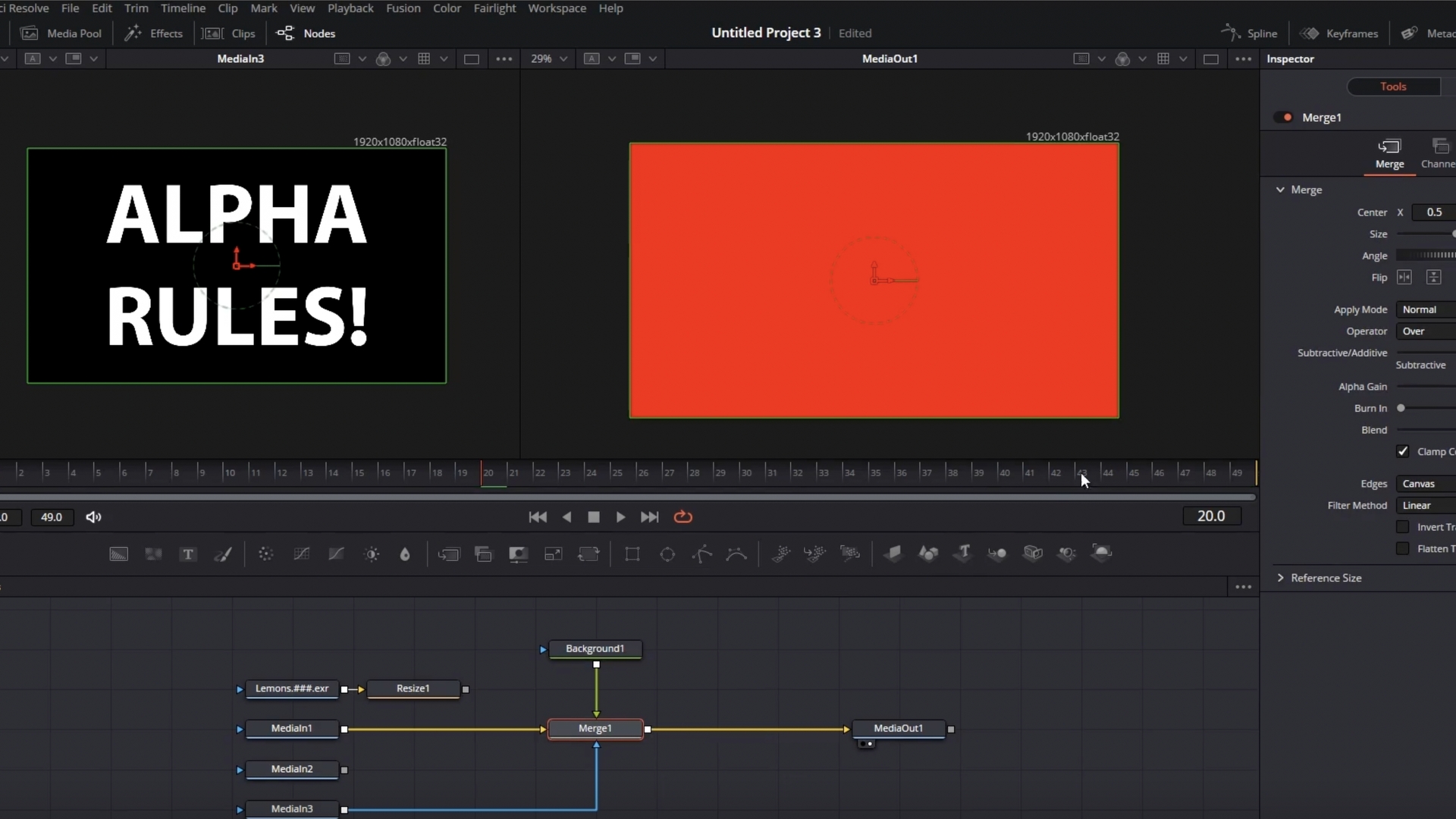
  6. This focused course teaches colorists how to properly prepare, export, and manage VFX shots within a professional color pipeline. You’ll learn how to deliver clean, editable plates to VFX teams and how to receive and reintegrate VFX renders with precision. The lessons cover technical essentials every colorist needs to avoid pipeline mistakes that can cost time, money, and image quality. Many colorists overlook VFX workflow details, but incorrect exports, faulty alphas, or poor matte handling can lead to broken composites, mismatched grades, or delays in post-production. Understanding how to prep and render alpha-based footage ensures seamless collaboration with VFX artists, protects your grade, and elevates the overall project quality. The footage used in this course is available for download. Download project files About the instructor Lee Lanier has created visual effects on numerous features films for Walt Disney Studios and PDI/DreamWorks. Lee is a world-renowned expert in the video effects field, and has written several popular high-end software books, and taught at the Gnomon School of Visual Effects in Hollywood. Who is this course designed for? Post Production professionals Colorists DaVinci Resolve users Finishing artists
  7. Hi Nandita, I think color is subjective and the final grade is always a result of the production, client and the people in the room. Therefore it’s not always possible to jugde the skills of a colorist by only looking at their final work. In addition, if a colorists does well is just as much about handling the process and the people in the room. That said, if a colorist has been working on long contracts with big clients in a large facility, you can assume they do their work quite well.
  8. Looks ungraded to me, did you download everything?
  9. Hi, where will i get the raw files that you used here? i've downloaded the file which you mentioned in this project, but its already graded.
  10. Can you please share the cameras the various clips where shot with? Thank you, great lesson
  11. Thanks for sharing, It was very helpful.
  12. Hi Guys! I've been an assistant colorist in India for the past year and a half. Before that, I graduated from a film school in USA, got really into color grading, taught myself some basics, shadowed at a post house in California for a few months and then came back to India to continue my career here. I'm looking to switch jobs because I think I'm not growing at my current company. I'm just matching big budget bolIywood films (which has been a great experience in terms of training eye and improving my matching skills) but now I want to start learn how to build looks and work with clients, do my own independent projects under the supervision of a colorist, learn more technical stuff from an experienced colorist. I feel like I'm at a point where I really want to work under someone who can really teach me and help me grow and not just work for any company/colorist who's reputed just for doing big budget films. Even though my company is considered one of the best in India for commercial films, I feel like there is a lack of innovation and technical know-how, they have been following the same methods since 30-40 years so I feel like I'm not learning enough. Like the best they do for giving a shot a film look is slapping some grains on it. There are many other small studios as well who are considered good and I want to apply there but my issue here is that I don't know how to identify a colorist whose work is crazy good? Like, how do you know just by looking at their work that this colorist is good/ know what they are doing? That they are creating amazing innovative looks? Are they technically strong? Their foundation is strong? How do you even identify that just by looking at their work? If y'all have any advice on how to approach my situation please please let me know! My untrained eye needs help. Studios that I'm thinking of applying are - (if y'all wanna check it out) Studio Skewer- https://www.instagram.com/studioskwer/?hl=en (Nicola Gasparri's work seems interesting to me) Bridgepostworks - https://www.instagram.com/bridgepostworks/?hl=en Famous- https://www.instagram.com/famous_1945/?hl=en Red Chillis - https://www.instagram.com/redchilliesent/?hl=en (Ken Metzker seems great!) P.S - I'll be traveling to the United States soon for vacation so I would love to visit some studios based in US and meet some fellow colorists there. I'll be in New York and California, Let me know if you're willing to meet me! Thank You!
  13. In the past, scopes (such as vector scopes) were used to check for neutral blacks and whites, but as for colour separation, this is a much more subjective thing. There are automatic colour balancing tools, but these generally do a poor job. You could use colour picking tools to examine the actual RGB values of any pixel (or group of pixels), but this 'absolute value' way of balancing doesn't really take into account how we perceive colour and contrast in the real world. I can't see how you can really colour grade (or call yourself a colourist) if you don't learn to trust your eyes. A lot of this comes down to learning to train yourself to be able to be more consistent with your grades. Unless you have some visual impairment, your eyes should have good colour acuity, but can be fooled if you don't follow certain practices with things like room lighting etc. Like any skill, it needs practise and perseverance to develop your abilities.
  14. Hello, Thank you for the course, I am really enjoying it. I have just a question: My understanding is that the order of operations of nodes is left to right and almost all info online I find states that one should start by adjusting contrast and exposure in the first node, and then proceed to the right, however here the LUT and exposure is added in the last node and then Kevin proceeds to the left. Is there a specific reason for this, or does it change much to do it the other way? Thank you!
  15. Does anyone know of a way to white balance technically without trusting the eyes? My eyes are often quite a bit off so I am looking for a way to get accurate white balance and as much separation as I can every time without trusting my eyes. I have Mononodes skin tone DCTL that I use and I think it helps a lot but sometimes there isn't any skintone in the shot. I'm hoping either via scopes or something someone has some secret sauce.
  16. Exceptional jury of international filmmakers, cinematographers and colourists revealed for the fifth edition of the awards IMAGE CREDIT: Park Chan-wook photo by Winnie Yeung @ Visual Voices, Image Courtesy of M+, Hong Kong FilmLight has announced the first set of creatives lined up to judge the 2025 FilmLight Colour Awards, including South Korean film director, screenwriter and producer, Park Chan-wook, who has been named the 2025 Guest of Honour; Company 3 founder and CEO, Stefan Sonnenfeld; Apple+’s, The Studio cinematographer, Adam Newport; and many more. Now in its fifth year, the FilmLight Colour Awards have quickly become an international platform for recognising excellence and artistry in colour grading. The 2025 edition will once again culminate in a ceremony held at EnergaCAMERIMAGE in November, celebrating the work of colourists across six categories: Theatrical Feature, Television Series/Episodic, Commercial, Music Video, Emerging Talent, and Spotlight. Submissions close on 31 July. 2025’s Guest of Honour and highly acclaimed film director, Park Chan-wook, is known for his bold visual storytelling and genre-defying narratives. He has captivated global audiences with landmark works such as Oldboy, The Handmaiden, and Decision to Leave. "It’s a privilege to be Guest of Honour at this year’s awards,” says Park Chan-wook. “Colour is not just a visual element. It carries stories, characteristics, ideas, and even musical elements like harmony, counterpoint, rhythm, and tone. It can also create the illusion of touch or smell. That’s why I never want to leave the colourist’s room. How wonderful would it be if I could keep working on the colour of a single project for years." Also joining this year’s panel is Stefan Sonnenfeld, founder and CEO of Company 3, widely regarded as one of the most influential colourists working today. Known for his collaborations with major directors across film and advertising, Sonnenfeld brings deep expertise and industry perspective. His portfolio includes iconic franchises such as Star Wars, Star Trek, Jurassic Park, Pirates of the Caribbean, and Transformers plus more recently Superman and F1. “I am very excited to join this distinguished panel of judges,” comments Sonnenfeld. “I have been following the FilmLight Colour Awards since their inception and have been consistently impressed with the talented cinematographers and colourists chosen to evaluate the work. The Awards have done an excellent job of highlighting the artistry of colour grading, and I am thrilled to be part of that process this year." FilmLight has also named the following international talent in its first wave of confirmed jurors: Bojana Andrić, SAS – leading cinematographer and Vice President of the Serbian Society of Cinematographers. Andrić has worked on feature films such as Follow Me, Love Cuts and Sweet Sorrow (awarded for cinematography) and her TV credits include Trail of the Beast (also awarded for cinematography), Pupin, Clinch and Andrija & Andjelka. Douglas Dutton – Paris-based freelance colourist, Dutton works across commercials, music videos, series, and video games. In 2024, he won the FilmLight Colour Award in the Emerging Talent category for his work on the Baltic Harmonical Diffraction commercial. Sylvester Fonseca, ISC – award-winning Indian cinematographer with over a decade of experience across advertising, cinema and OTT. His acclaimed work includes Amar Singh Chamkila, Kennedy (Cannes 2023), and standout projects like Lust Stories, Sacred Games, and Island City (Venice 2015). A sought-after talent in advertising, he’s behind campaigns for Fevicol, Dream11, and Ariel’s viral #ShareTheLoad. In 2024, he won his second Filmfare Award and was inducted into the Indian Society of Cinematographers (ISC), cementing his status as one of India's leading cinematographers. Callan Green, ACS, NZCS – New Zealand–born, award-winning cinematographer with over 27 years of experience. Green’s recent credits include Nobody 2 (Universal), The Beekeeper 2, and several episodes of Netflix’s The Gentlemen. He was named New Zealand Cinematographer of the Year in 2024. Philip Hambi – leading commercial colourist at Absolute in London. Hambi has worked with some of the industry’s most celebrated directors and cinematographers for global brands including; Nike, Glenmorangie, Martini, Samsung, BMW, Lexus, Meta and Google. He collected his third Silver Arrow and third D&AD awards in 2025 for his contribution to Rich Hall’s stunning Riyadh Season film, Crawford Vs Madrimov: Everything Or Nothing. Kim Ji-yong – highly acclaimed South Korean cinematographer and director known for his striking visual style and collaborations with top directors like Park Chan-wook and Hwang Dong-hyuk. He is best known for his recent work on Netflix’s popular TV Series, Squid Game, as well as films like Decision to Leave, A Bittersweet Life, and The Fortress. Nadia Khairat Gomez – freelance colourist based between Berlin and Madrid working internationally across narrative, commercial, and music video formats. Gomez won the 2024 FilmLight Colour Award in the Music Video category for Brodka x Igo – Myślę sobie Ż, praised for its bold, emotional palette. Petra Korner, AAC – award-winning cinematographer based in Europe and the US, Korner’s credits span high-end TV dramas such as A Discovery of Witches (Sky), His Dark Materials(HBO), and Shadow and Bone (Netflix), as well as feature films including The Wackness, The Informers starring Winona Ryder, Kim Basinger, Billy-Bob Thornton and Mickey Rourke; and Wes Craven’s My Soul To Take. Andrea Leigh – Canadian-born senior colourist at Harbor, Leigh’s credits span major studio films such as Neil Blomkamp’s Elysium and Chappie; Immaculate (for which she received an HPA nomination); Nightbitch; as well as award-winning indies, Mandy, directed by Panos Cosmatos. Recent credits include Sirens by Molly Smith Metzler and Piece by Piece by Morgan Neville. Fady Melek – senior colourist based in LATAM with over 20 years’ experience, best known for his work the official FIFA World Cup music video clips, such as Dreamers, performed by Jung Kook of BTS, and with over 30 feature films graded worldwide. In 2024, he received a Global Recognition Award™ and three Gold Telly Awards for Best Use of Colour. Frida Marzouk, AFC – cinematographer whose international trajectory—from France to the US and across North Africa and the Middle East—combines technical rigor with a deeply emotional visual approach. Her work spans compelling narrative and documentary cinema, earning acclaim on the world festival circuit. Adam Newport-Berra – cinematographer and director best known for his work on The Studio(Apple+), The Bear (pilot episode), Euphoria (final episodes, Season 1) and his breakthrough feature The Last Black Man in San Francisco. He has received multiple Cannes Lions and VMA nominations for Best Cinematography across commercials and music videos. The remaining jury will be announced in the coming months with this year’s call for entries closing on 31 July. A shortlist will be announced in autumn and the winners unveiled at EnergaCAMERIMAGE in November. For more, visit: www.filmlightcolourawards.com ###
  17. Thanks for the insightful course, Cullen! I've tried to get the LUT assistant from the link you guys share but didn't receive anything from here https://ravengrade.com/look-development-starterkit/ . Could someone please send me this to my email: migueledwardowicz@gmail.com Thank you in advance!
  18. This is the best class in lowepost. Thank your for your kind sharing!
  19. hello, could you please share these film LUT?
  20. It all depends on the footage. If you have harsh highlights or a very high key image” then your HDR pass needs a lot of adjustment. In this case you do your first pass in HDR without! adjusting your top highlights too much or you have to stretch them again in P3. So you have to find a middle ground. And of course-you might have less details in P3. …less dynamic range. The DV pass is for SDR REC709, not for P3. Generally: make less contrast for the HDR pass. punch the highlights up for the SDR pass. There is no “one fits all” rule.
  21. Thank you sir for your valuable feedback. As per your suggestions, at first I finished my HDR grade then I just change my viewing colourspace to nomal DCI P3 & offset. Now I have to face with some problem. I notice that After convert the colour space to P3 & offset , the pick highlight of a shot have no details, to get back the details in highlight I need to regrade the shot in the first layer where I do the Base grade. On the other hand when I do the DV pass it’s getting back the pick highlight but looks muddy to see in P3 projector. need your suggestions once again. Waiting for feedback ***one more things, if I increase the saturation & brightness of a shot in first layer too much , then I insert a layer and reduce the pick highlight with BaseGrade tool & reduce the saturation with hue shift tool , is that right procedure ? Recent a DoP force me to follow this procedure but I said it’s wrong procedure to grade. Am I right or wrong ?
  22. Hey Kevin, I’m using DaVinci Resolve 20. I’m able to perform a ripple cut using Cmd + \, but I’m having trouble with clip replacement. When I try to replace a clip, it also replaces the original audio — even though the audio track is locked. I’ve tried several times, but the issue persists. Not sure what’s going wrong? Thanks
  23. Hello, Is anyone have an answer to this question ? I have the same setup then Florian and the image change totally if I check or not "4:4:4 SDI" even if I'm connected via HDMI on studio monitor 3G... Thanks cedric
  24. I seem to be missing the footage for Lesson 4 -Low Luma Compression Techniques
  25. Probably already solved, but here is the solution: You can grade in HDR-no need to make a DV pass, yet. Take the timeline once done and as you are grading in a scene referred environment it should just convert to P3 easily. Then you do a little offset. India projectors are 12ftl that’s why your offset needs a bit more power. For IMAX you can give them the normal P3 DCP render. They will do the rest. All IMAX are done at PrimeFocus in Mumbai. You can also ask them if you have any doubts. Additional info: Imax has to accept the film first as it works on a revenue share basis. If they say yes, then it will go to the IMAX cinema. good luck
  26. Who is this course designed for? Intermediate colorists
  1. Load more activity